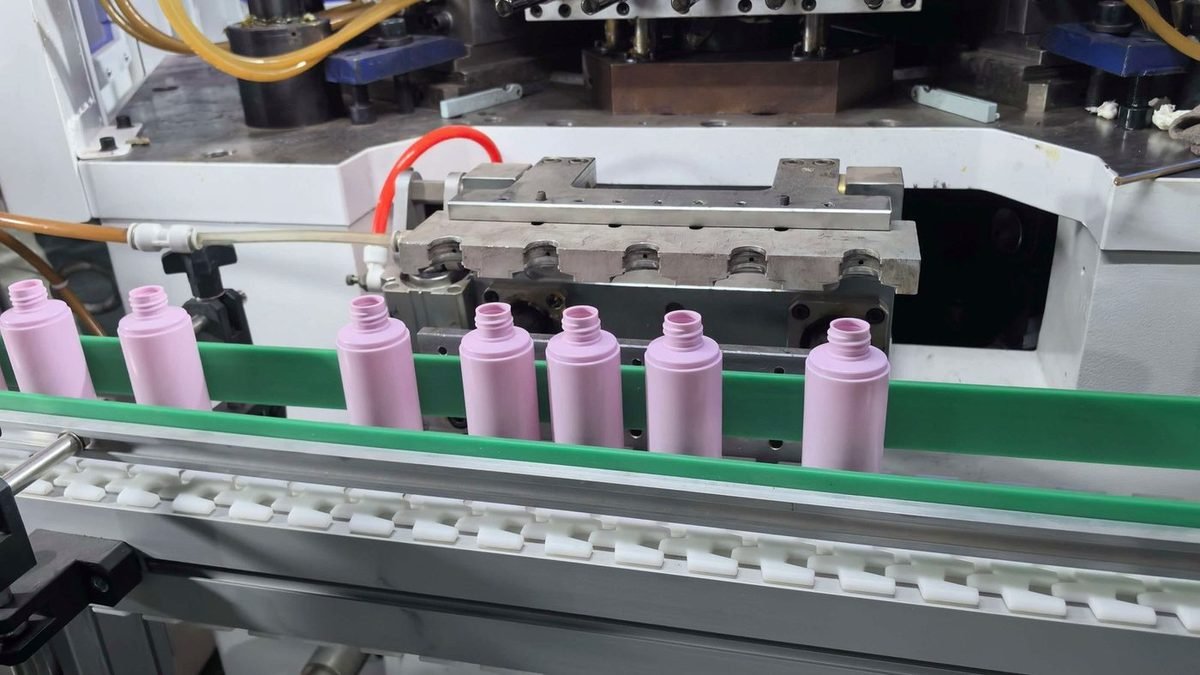
A buyer sends the same specification to three factories and gets back $1.28, $1.35 and $2.05 per piece. The first number looks like the best deal. It usually is not. The $1.28 quote is EXW from an inland factory, the $1.35 is FOB Ningbo, and the $2.05 is DDP to a warehouse in New Jersey. Add export declaration, trucking, ocean freight, duty, destination charges and inland delivery, and the $1.28 piece commonly lands at $2.18 while the $2.05 piece lands at $2.07. The cheapest-looking quote is frequently 5 to 15 per cent more expensive in the wrong direction, and the buyer only discovers it after the goods have shipped.
This guide does not repeat what drives a unit price — that is covered in our MOQ, lead time and pricing breakdown. It deals with the wrapper around the price: what EXW, FOB, CIF and DDP each oblige, where risk passes, how the cost stack behaves at 2 CBM versus 28 CBM, and which invoice lines appear three weeks after you thought the deal was closed. Everything below uses plastic hair accessories — wig stands, combs, spray bottles — because their value-to-volume ratio makes the terms matter more than they do for dense goods.
The number on the quotation is not the number you pay
A foldable wig stand at 1,000 pieces costs somewhere between USD 0.95 and 1.60 FOB China depending on wall thickness, colour and packaging. That range is roughly 40 per cent wide, which is why buyers fixate on it. But the product cost is only the first of six lines that end up in your landed cost per unit, and at low volumes the other five can add 40 to 60 per cent on top.
The lines are: the goods themselves, export clearance and origin handling, main carriage, insurance, import duty and taxes, and destination handling plus inland delivery. An Incoterm is simply a contract about which of those six you pay and at which physical point the goods stop being the seller’s problem. It is not a discount, a service level, or a statement about quality — and under Incoterms 2020 it does not even cover payment terms or the transfer of ownership, which sit in the sales contract instead.
What each term actually obliges
Six terms cover almost every quotation a hair accessories buyer will see. The differences that cost money are in the last two columns: who pays the import charges, and where risk passes.
| Term | Export clearance | Main carriage | Cargo insurance | Duty and import VAT | Risk passes to buyer |
|---|---|---|---|---|---|
| EXW | Buyer | Buyer | Buyer | Buyer | At the factory door, not loaded |
| FCA | Seller | Buyer | Buyer | Buyer | On handover to the buyer’s carrier |
| FOB | Seller | Buyer | Buyer | Buyer | When goods are on board at origin port |
| CIF | Seller | Seller | Seller, minimum cover | Buyer | Still on board at origin port |
| DAP | Seller | Seller | Seller, optional | Buyer | At the named place, not unloaded |
| DDP | Seller | Seller | Seller, optional | Seller | At the named place, not unloaded |
EXW looks cheapest and is usually the wrong term for a first order
Under EXW the buyer is responsible for export clearance in China. That is a customs procedure a US or EU company cannot easily perform, so in practice your forwarder performs it and bills you a pickup fee plus an export declaration, typically USD 120 to 220 per shipment on top of the EXW price. Vendors in Yiwu and Guangzhou quote EXW because it is the smallest number on the page, not because it saves you money. If you are collecting from a factory with your own forwarder, ask for FCA instead: the seller handles export clearance, the price moves up slightly, and the paperwork becomes straightforward.
FOB is the working default for container buyers
FOB names a Chinese port. Our shipments normally load through Qingdao or Shanghai, roughly two days by truck from Xuchang, and the FOB price includes that inland leg, the export declaration and terminal handling at origin. FOB is the right choice when you already have a freight forwarder, when you are consolidating several suppliers, or when you want control of the carrier and the insurance claim. Ask for the quote as “FOB Qingdao” or “FOB Shanghai” rather than plain “FOB”, because the port changes the inland trucking cost by USD 200 to 500 per 40ft container.
CIF gets you to a port, not to your warehouse
CIF includes ocean freight and a minimum insurance cover to a named destination port. Two things surprise buyers. First, the risk transfers at the origin port, the moment the container is on board — not when it arrives. If the vessel is damaged you claim against the insurer, not against the factory. Second, CIF leaves destination terminal handling, documentation, customs brokerage, delivery order fees and inland trucking with you; on a 40ft container into a US or EU port those lines commonly total USD 350 to 700. CIF is convenient for a first trial container and rarely the cheapest option at volume.
DDP is a price, not a service level
DDP means the seller clears import and pays duty and import taxes. The trap is what “import taxes” is taken to mean. A quote described as DDP into the EU that excludes VAT is not DDP; it is DAP with a friendly label, and the VAT bill lands on you. Into the US, DDP requires the seller to act through a US importer of record or a foreign entity with a bond, which some factories arrange through a broker and some simply do not. Also check exclusions: demurrage and storage after the free days, remote-area delivery surcharges, and unloading at destination are usually outside any DDP quote.
Where the money actually goes between FOB and DDP
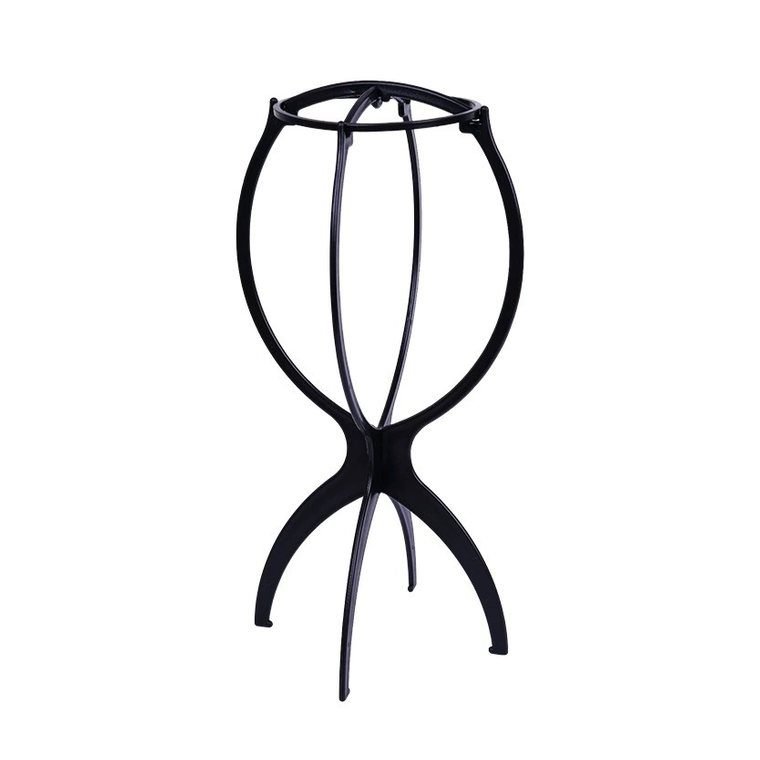
The clearest way to see the terms at work is to price the same order at three shipment sizes. The product is a foldable wig stand at USD 1.35 FOB, 50 pieces per carton, carton 62 × 42 × 38 cm, 0.099 CBM, 10.4 kg gross. One thousand pieces is 20 cartons, 1.98 CBM and 208 kg.
| Cost line, USD per piece | 1,000 pcs, LCL | 14,100 pcs, 20ft | 34,300 pcs, 40HQ |
|---|---|---|---|
| Product, FOB China | 1.35 | 1.35 | 1.35 |
| Ocean or LCL freight | 0.22 | 0.16 | 0.08 |
| Origin handling and documents | 0.10 | 0.03 | 0.02 |
| Destination handling and delivery | 0.21 | 0.04 | 0.02 |
| Duty and fees, about 8% | 0.13 | 0.12 | 0.12 |
| Inland haul to your warehouse | 0.09 | 0.01 | 0.01 |
| Landed cost per piece | 2.10 | 1.71 | 1.60 |
The same product, from the same machine, lands 31 per cent cheaper per piece on a full 40HQ than on a 2 CBM LCL shipment. None of that difference is in the factory price. It is entirely in how freight and fixed charges are divided, which is why comparing FOB prices at different volumes is meaningless and why a “cheap” supplier can produce an expensive shipment.
Light plastic cubes out long before it weighs out
A 40HQ has about 76 CBM of nominal space and 68 CBM usable after pallets and stacking losses; a 20ft has 33 nominal and roughly 28 usable. At 0.099 CBM per carton and 10.4 kg gross, the 40HQ fills with 686 cartons, 34,300 pieces, at 7.1 tonnes. The container’s payload limit is around 26 tonnes. You run out of space at a quarter of the weight, which is normal for wig stands, spray bottles and hair rollers, and it means every decision about carton size and nesting is really a freight decision.
Air freight punishes the same ratio. Chargeable weight is the greater of actual weight and volume multiplied by 167 kg per CBM, so 1.98 CBM of wig stands becomes 331 kg chargeable against 208 kg actual. At USD 4.20 to 6.50 per kg, moving 1,000 stands by air costs USD 1,390 to 2,150 — USD 1.39 to 2.15 per piece, more than the product itself. Air is defensible for a sample carton, a restock of a best-selling colour, or a launch deadline. It is not a shipping strategy for plastic accessories.
Risk transfer is not the same thing as cost transfer
Under CIF you pay freight to your destination port, which makes the term feel like the seller is responsible until arrival. Legally the opposite is true: risk passes when the goods are on board at the origin port, exactly as under FOB. If a container is lost or damaged mid-voyage, the seller’s obligation is fulfilled and your remedy is an insurance claim, which is why the insurance clause matters more than the freight line.
CIF requires only minimum cover, usually Institute Cargo Clauses (C), at 110 per cent of contract value. ICC (C) is a named-perils cover: it pays for total loss, sinking, fire and collision, but not for water damage, theft from a container or handling damage, which are the realistic risks for cartons of plastic. Ask for ICC (A) instead, or arrange your own policy. Marine cargo premiums for plastic accessories typically run 0.25 to 0.55 per cent of insured value, so USD 25 to 55 on a USD 10,000 shipment — a small number against a claim you cannot make.
Comparing two quotes without doing the arithmetic
Take a real decision pattern. Supplier A quotes USD 1.35 FOB for 1,000 foldable stands; supplier B quotes USD 2.15 DDP to a New Jersey warehouse. Supplier A looks 37 per cent cheaper. Normalise both to landed cost: supplier A reaches USD 2.10 per piece on a 2 CBM LCL shipment, plus a broker fee of USD 120 to 150 and your own time on the entry. Supplier B is USD 2.15 all in, with no broker, no entry and no duty exposure. On that volume the two are within 2 per cent, and B carries less operational risk.
Run the same comparison at 34,300 pieces and the answer inverts. Supplier A lands at USD 1.60; supplier B’s DDP price would need to be below USD 1.75 to compete, and DDP quotes at that volume usually carry a margin of 8 to 12 per cent for the freight and duty risk the seller is taking. The rule of thumb: under about 5 CBM, DDP is often the better buy even at a higher unit price; above 15 CBM, FOB plus your own forwarder typically wins.
The invoice lines that appear after you have agreed the price
Most disputes about quotations are not about the unit price; they are about charges that were never in it. Watch for these, and ask whether each is included before you compare anything:
- Origin terminal handling and documentation — USD 120 to 220 per container, sometimes split as THC, doc fee and seal fee.
- Security filings — US AMS and ISF at USD 30 to 60 per shipment, filed by the forwarder, not the factory.
- Destination THC, delivery order and customs brokerage — USD 250 to 450 per container into a US port, often more in the EU.
- Demurrage and detention — free time is commonly 5 to 7 days at destination; after that USD 75 to 150 per container per day, charged to whoever holds the bill of lading.
- Import VAT and duty deferment — separate from DDP unless the quote says otherwise, and in the EU tied to your EORI number.
- Compliance costs at destination — EU packaging EPR registration and GPSR responsible-person details are importer obligations, not shipping lines, and are covered in our EU compliance walkthrough.
What to put in the RFQ so the quotes are comparable
Comparability is a specification problem, not a negotiation problem. Send every supplier the same request and the numbers line up:
- The Incoterm with the named place: “FOB Qingdao”, “CIF Hamburg”, “DDP 07001”. A term without a place is not a quote.
- Quantity, colours and packaging, down to polybag thickness and carton marking.
- Carton dimensions, pieces per carton, gross weight and CBM per 1,000 pieces — without these you cannot compute freight per unit.
- HS code and country of origin, so your broker can price duty before you compare. A tail comb usually clears under 9615.11; a plastic wig stand more often under 3924.90 or 9615.19, and the two lines do not carry the same rate.
- Quote validity, typically 15 to 30 days given resin and freight volatility, and the currency.
- Payment terms, usually 30 per cent deposit with the balance against the bill of lading copy, and the quantity tolerance, commonly plus or minus 5 per cent.
If you are still at the stage of choosing between suppliers rather than terms, the factory verification checklist covers what to check before price becomes the deciding factor. For our own terms, the shipping and export page lists the ports we load from and the documents we issue with each shipment.
Two things to do before the next quote arrives
First, build the landed-cost line into your comparison sheet now: product, freight per unit, origin charges, duty percentage, destination charges, inland delivery. Six rows, one formula, and the cheapest-looking quote stops winning arguments it should not win. Our container loading guide gives the carton and CBM figures you need for the freight row if the supplier has not provided them.
Second, ask for the quote in the term you can actually execute. If you have a forwarder, ask FOB and ignore EXW and DDP. If you are testing a market with 1,000 pieces and no import infrastructure, ask DDP with the VAT position stated in writing. Either way, get the named place and the exclusions in the same email. A quotation with no term is a price, not an offer, and the difference usually shows up as an invoice line — or as a request for your import details two days before the vessel closes.
We quote FOB Qingdao or Shanghai as standard on the full accessory range, including foldable wig stands, and can quote DDP through a forwarding partner for trial volumes. Custom colours, printed cartons and private label under our OEM service change the packing dimensions, so ask for CBM per 1,000 pieces with the quotation rather than after the order. Send the spec through the contact form and you will get it back with the term and place named.
Related reading
- How to import hair accessories from China — documents, duty and the clearance sequence for a first shipment.
- MOQ, lead times and pricing explained — how minimums are set and what moves the unit price.
- Wholesale guide for African and Middle East markets — container sizes, packaging expectations and payment norms.
Leave a Reply