Two dates decide whether a hair accessories programme makes money: the day you place the purchase order, and the day the cartons land in your warehouse. Buyers who treat lead time as a fixed number — thirty days, always — get caught in the same two months every year. A 1,000-piece wig stand order that runs through the moulding shop in 22 working days in March takes 34 in October, then waits eleven days for a vessel, and arrives a fortnight after the shelf date it was planned for.
What follows is the calendar our own production planners work from: a factory in Xuchang, Henan, China, moulding on its own tooling and shipping to the US, UK, EU, Turkey, the Gulf and West Africa. Every figure is a typical range, not a quotation, and your own PO history should override it after three shipments. It runs from the lead-time stack to the freight peak, and ends with a calendar you can lift into a planning sheet.
Build the order date backwards from the shelf, not forwards from today
Most late shipments are arithmetic failures, not production failures. A buyer takes the 25-day production time from a quotation, adds 30 days of transit, and books a date that ignores sampling, packaging approval, port congestion and the pre-holiday queue. Start at the shelf date instead, and subtract every stage at its realistic long end rather than its best case.
| Stage | Typical range | What pushes it to the long end |
|---|---|---|
| Artwork and dieline approval | 5–14 days | Barcode or legal text mismatch, second revision round |
| Pantone lab dip | 3–7 days | Metallics, translucent tints, matching to a fabric swatch |
| Pre-production sample | 7–10 days | New tool, first-shot sink marks or short fills |
| Bulk production, existing tool | 20–30 days | Peak queue, four or more colour changes, hand assembly |
| Bulk production, new tool | 45–60 days | Tool build 18–30 days, then trials before a full run |
| Port-to-port, ocean | 14–18 days USWC; 30–36 days North Europe | Rollover to a later sailing, transhipment, congestion |
| Port to your door | 7–14 days | Customs examination, chassis shortage, DC appointment slots |
| Repeat SKU to a US warehouse | 45–60 days | Existing tool, existing carton, no new colour |
| New SKU with new tool to the EU | 95–125 days | Tool plus sample plus retail packaging plus longer transit |
Run it once with real dates. You want stock on the shelf on 15 September. Reordering a foldable stand you already sell, subtract 60 days: the PO needs to be with us by mid-July. The same stand in a new Pantone colour and printed box, subtract 95 days: early June. A new shape needing a mould, the date moves to May, and the mould is signed off before the packaging artwork is even finalised. That gap between 60 and 95 days is where the money sits, and running artwork and tooling in parallel rather than in sequence recovers three to four weeks of it.
What actually happens on the factory floor in the fourth quarter
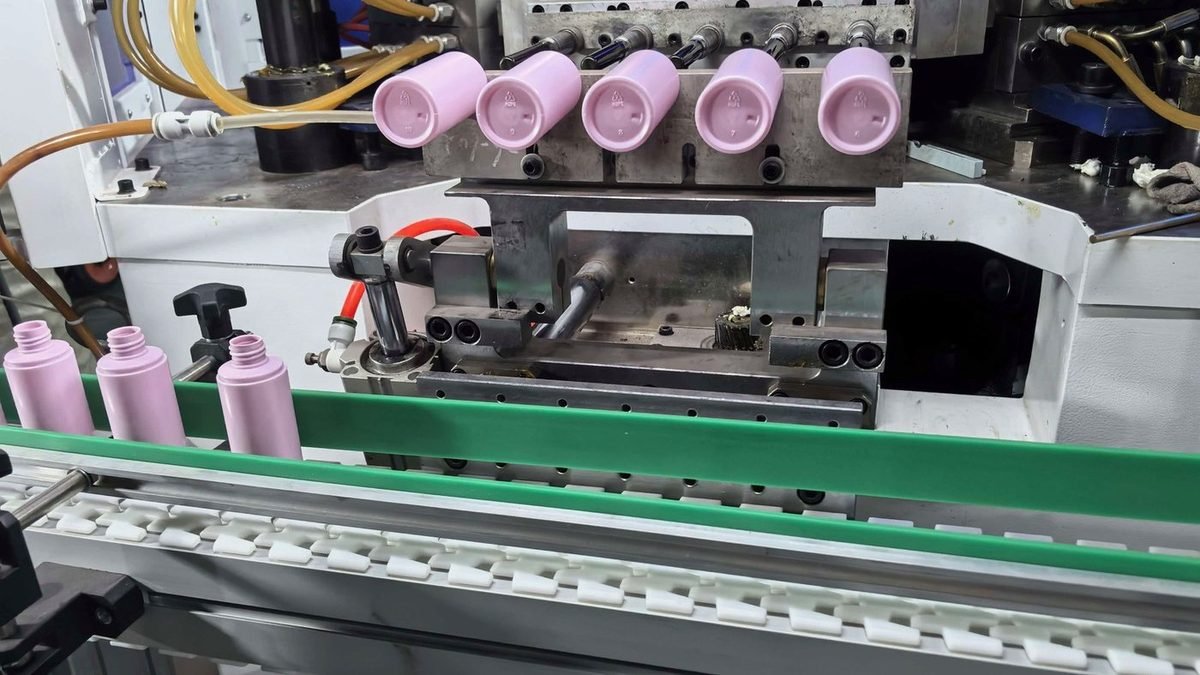
Injection moulding is a queue business. A tool with eight cavities on a 30-second cycle produces roughly 900 to 1,000 pieces an hour, so a 1,000-piece order consumes about one hour of machine time. That hour is never the constraint. The constraint is the slot: which machine, which day, after which colour purge, with which material already dried.
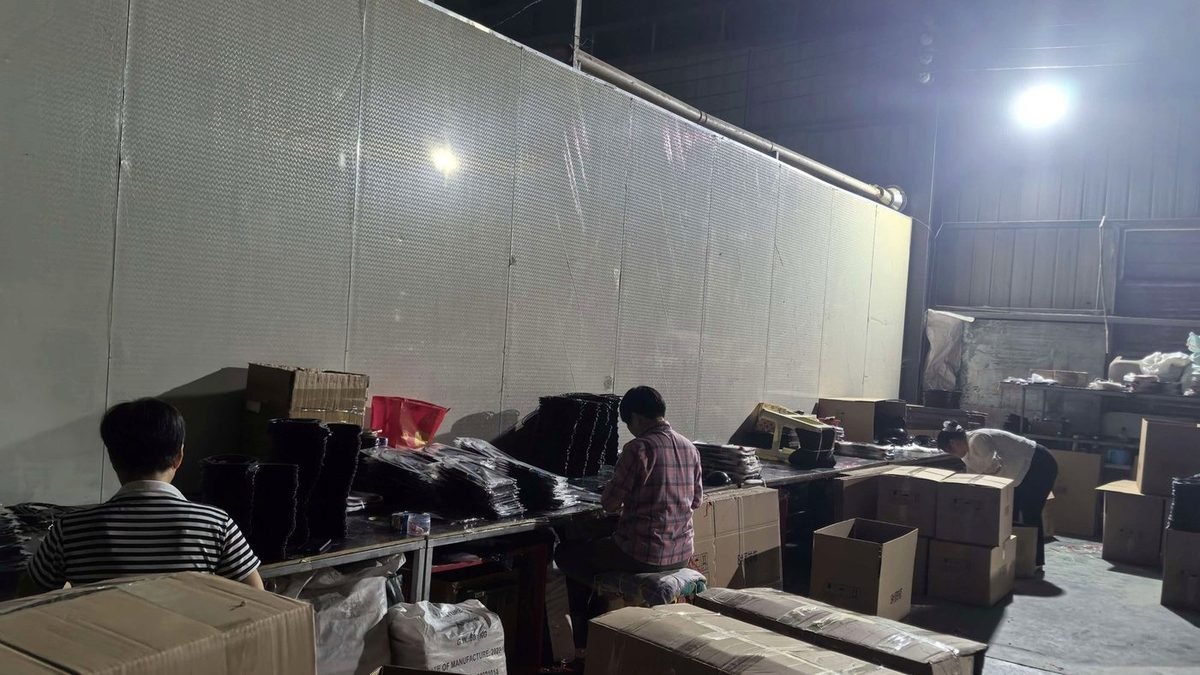
Three things consume the calendar in October and November. Mould changes: swapping a tool on a 250-tonne machine and stabilising the first shots takes two to four hours, and a colour change adds one to two hours of purging before the first sellable part. Tooling availability: if your SKU shares a tool family with other buyers’ orders, batching is what holds the unit price down, and batching means waiting for the batch to fill. Labour: carding, bagging and packing are hand operations, and 1,000 pieces with a euro-slot card and a polybag consume two to three people for a day and a half.
So your order date matters less than your position in the colour sequence. Black, white and two pastels may run as four separate batches; black and white only clears in one run and ships a week earlier. If the range can survive on three colours instead of six for the first season, say so at quotation stage, not at artwork stage.

The Chinese New Year wall resets everything in February
Chinese New Year is the largest fixed event in any sourcing calendar, and it does not cost you a week. In 2027 the holiday falls in the first week of February. Factories begin winding down 10 to 15 days before it as material deliveries stop and finishing lines clear; much of the workforce travels home 7 to 20 days ahead, because rail and bus tickets are booked months in advance; production restarts 7 to 10 days after, but staffing only returns to normal around day 18 to 25, as workers trickle back and new hires are trained.
Net effect: a four to six week dead zone in production, plus a freight squeeze on both sides of it. Orders placed in January are not late because anyone is careless. They are late because the factory is empty and the port is jammed with everyone else’s pre-holiday rush.
Three habits remove most of that risk. Place the post-holiday order in November, not January, and ask for a written slot with a week number rather than a lead time in days. Buy your top three SKUs six to eight weeks deep in November and December, while the factory is still running and vessel space is bookable. Start any new tool in October: a mould built in December is not trialled until March. Resin closes on a similar schedule — we hold a 30-day buffer on standard PP and ABS, but a special masterbatch ordered in January is a February problem.
Ocean freight peaks on a different clock
Production and shipping do not squeeze at the same moment, which is why single-cause explanations for late deliveries are usually wrong. Rates and space tighten twice: late August to mid-October, as US and European retailers pull holiday inventory forward, and mid-December to early February, before the New Year shutdown. Trans-Pacific spot rates move 1.6 to 2.5 times between the June trough and the September peak, and space allocations are typically cut 10 to 14 days before a sailing — exactly when a buyer running two weeks late tries to book.
Typical port-to-port transit, excluding the door leg: 14 to 18 days from Ningbo or Qingdao to Los Angeles; 28 to 33 to New York; 30 to 36 to Rotterdam and Hamburg; 25 to 32 to Istanbul; 30 to 40 to Lagos; 28 to 34 to Durban. Add 7 to 14 days for clearance, drayage and a warehouse appointment, and another 5 to 10 if the container is selected for examination.
LCL is priced per CBM with a one-CBM minimum, typically 45 to 95 USD per CBM from Ningbo to a European base port, plus destination CFS and documentation charges of 60 to 120 USD per shipment. Below roughly 12 to 15 CBM, LCL usually wins once those fixed charges are counted; above it, a 20ft at 1,600 to 3,200 USD off-peak is cheaper and faster to release. Run that break-even before deciding a first order is too small to containerise — the method is in our container loading guide.
Four windows that actually shape the year
Most trade customers do not buy evenly across twelve months. They buy against four or five retail and salon events, each with a ship-by date set by the shelf set rather than by the factory.
| Window | Ship from China by | Why that date |
|---|---|---|
| Halloween and cosplay, US and UK | 10–20 August | Costume retail sets in early September; late stock becomes discounted stock |
| Black Friday and holiday gifting | 20 September–5 October | Marketplace and DC receiving cut-offs fall 4–6 weeks before the event |
| Back to school, US and EU | 15–31 May | Salon and beauty-supply resets run through July and August |
| Ramadan and Eid, Gulf, Turkey, North Africa | 4–6 months ahead | Moves about 11 days earlier each year; in 2027 it lands in February–March, against the New Year shutdown |
| January salon reset | 15–30 November | Has to clear the factory before February, so it sails before the rush |
The Ramadan row is the one buyers most often get wrong, because the date moves. Between 2026 and 2028 the start of Ramadan shifts roughly 22 days earlier in the Gregorian calendar, so a Gulf distributor who ordered in October for a March arrival will be six weeks late the next year if they reuse the same calendar. Re-derive Islamic calendar events every season instead of copying last year’s purchase order.
For salon and barber chains the pattern is sharper: September to November carries the largest share of the year’s comb and stand volume, because chains restock before the pre-holiday service peak and again before January price increases. Their production slot for that window is decided in July.
Where the order date actually slips
Across a few hundred purchase orders a year, the delay almost never comes from the moulding machine. It comes from approvals, and the costs are predictable.
- Packaging artwork and dieline, 5 to 14 days. The dieline has to exist before artwork can be laid out, and barcodes, warnings and importer addresses are often supplied late by the brand owner. This is the longest external dependency in the chain.
- Pantone approval, 3 to 7 days per round. A lab dip is a physical plaque we mould and send; approving it on a monitor costs a round trip.
- Sample sign-off, 7 to 10 days. The factory side is fine; the delay is usually the buyer’s internal review, which eats a week nobody budgeted.
- Deposit and payment instruction, 3 to 5 days. Slots are held against a received deposit, not a received PO.
Two fixes recover most of those days. Lock packaging first, because it is the only item here that depends on a third party outside the factory, then run colour approval in parallel with the tooling check. Nominate one person with authority to approve artwork and colour within 48 hours — the most common cause of a missed sailing we see is a five-day silence on a colour plaque.
Splitting the order beats expediting it
When a shipment will be three weeks late, the instinct is to pay for speed on the whole order. That is usually the wrong trade. Air freight is charged on volumetric weight with a divisor of 6,000 — one cubic metre is about 167 chargeable kilos. A carton of 60 × 40 × 25 cm is 0.06 CBM, so 10 chargeable kilos whether it holds six kilos of product or twelve. At 5.50 to 7.50 USD per kilo, three such cartons cost 165 to 225 USD to fly.
The same volume moves by sea for around 15 USD at 80 USD per CBM. Air costs roughly ten times as much per piece but buys back 25 to 30 days, so the rational move is a split: fly 10 to 20 per cent of the order — the fastest-moving SKU, or the one a key account has already committed to — and let the balance sail. Two hundred pieces of a folding stand occupy 0.18 CBM and reach a European warehouse in five to seven days.
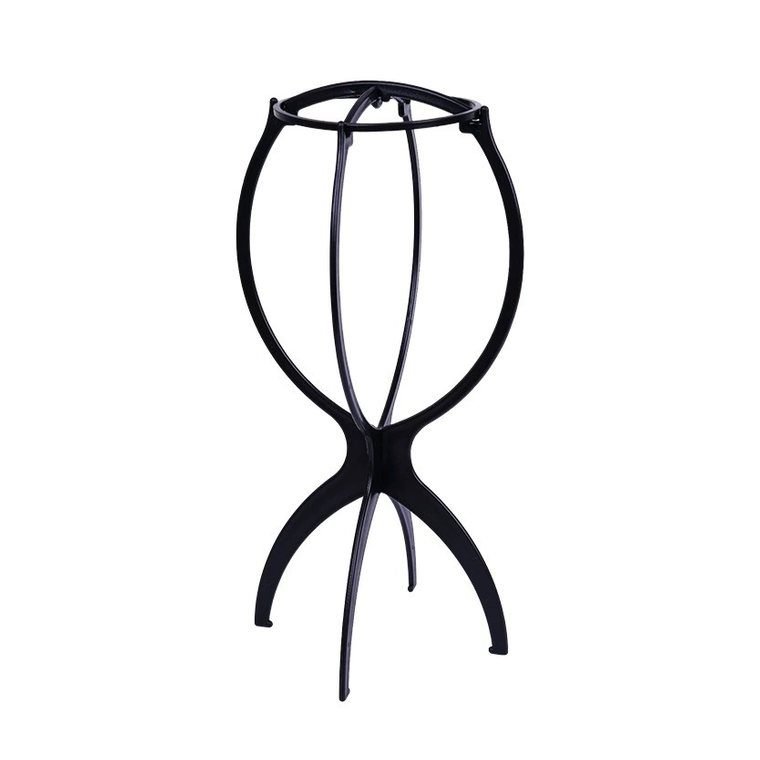
The products that tolerate air are the flat, dense ones: tail combs and rat-tails, sectioning clips, tape rolls, hair nets, teasing combs. The products that do not are the hollow ones: ventilated and tripod stands cube out long before they weigh out, so you pay for air on empty space. If air is genuinely necessary on a stand order, ship the foldable version, which packs at roughly 0.045 CBM per dozen against 0.06 for the rigid classic model — about 25 per cent less chargeable weight. Our foldable wig stand was designed around that constraint.
A two-lot production run is the other split worth planning: 60 per cent first, 40 per cent four weeks later. It costs a second set-up and booking, typically 150 to 300 USD on an LCL-sized balance, but it puts stock on shelf a month earlier and leaves a natural point to fix a colour before the full quantity is committed.
A calendar you can copy
This is the working version, built for a buyer whose fiscal year starts in January and whose main markets are the US, UK, EU and Gulf. Shift it two to four weeks if your retail calendar differs.
| Month | What to have done |
|---|---|
| January | Production restarting; confirm the slot booked in November and reserve February–March sailings |
| February | New Year dead zone; use it for artwork and dielines for the second half, not for production promises |
| March–April | Back-to-school production; the cheapest ocean rates of the year, so move anything heavy now |
| May | Back-to-school ships; place Halloween orders and start tooling if the season needs a new shape |
| June–July | Halloween production; Black Friday POs placed, packaging approved, colours signed off |
| August | Halloween ships by mid-month; Black Friday production running; space tightens from here |
| September | Black Friday ships by early October; January-restock PO placed so it clears the factory before February |
| October | Peak freight; new tooling approved now, never in December; no new colours unless unavoidable |
| November | January restock ships; post-New-Year PO placed with a written slot; six to eight weeks of buffer on top sellers |
| December | Pre-holiday rush; space scarce and rates high; nothing new, only confirmed repeat production |
Two actions are worth taking this week. Take your three highest-velocity SKUs, find the shelf date you actually need, and subtract the numbers in the first table — not the round number in an old quotation. Then put that order-by date next to the Chinese New Year date in the same planning sheet, because the collision between the two is what turns a delay into a missed season.
If you want a slot checked against a real shelf date, send the SKU list, the quantity and the month you need stock, and we will confirm which week the tool is free. The factory page shows the moulding and assembly floors, shipping and export covers consolidation, and the contact page reaches the planning desk. Order quantity changes both price and queue position — our MOQ and lead time breakdown covers that side, and OEM services explains what a custom colour or carton adds at each stage.
Leave a Reply